The Horror
Ryan Coogler, Sinners, 2025, screenshot [courtesy of YouTube]
Share:
How curious that Joseph Conrad’s novella Heart of Darkness (1899) is not read as a horror story, because that’s what it is. Even Apocalypse Now (1979), the most famous film inspired by the work, presents the story as something like an existentialist thriller. The problem with existentialism is that it insists humans are the same throughout the ages. Nothing ever changes. The sun always rises. This, too, shall pass. “There is no document of civilization which is not at the same time a document of barbarism,” writes Walter Benjamin. It seems, in this case, that the most brilliant member of the Frankfurt School made a misstep. He, like so many novelists and theorists, boiled a historically specific form of cruelty, greed, and oppression down to the facts of life. This transhistorical view, as social theorist Moishe Postone would describe it in the early 1990s, is not enlightening; indeed, it’s disempowering. We must always see the barbarism of capitalism as specific to its historically determined system of social relations.
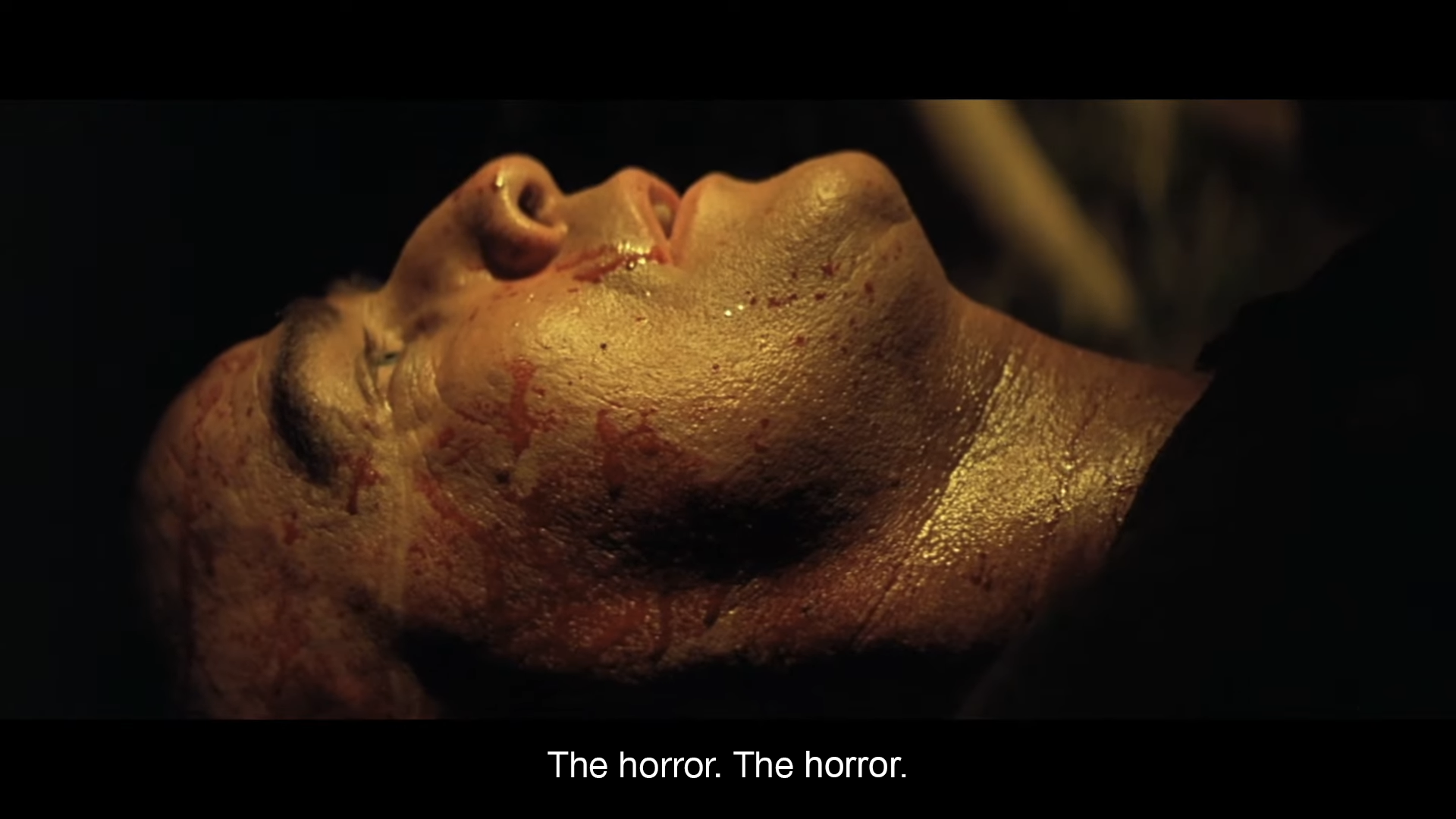
Francis Ford Coppola, Apocalypse Now, 1979, screenshot [courtesy of YouTube]
To be fair, there is a bit of this transhistoricism in the opening of Heart of Darkness. The storyteller, steamer captain Charles Marlow, and the other sailors on his ship are waiting for the tide to change on the river that supplies the then-center of the capitalist world, London, with raw materials, bodies, and goods. The setting is the twilight of the 19th century. Britain faces fierce competition from Germany and the United States, which are rapidly industrializing and accumulating capital. Marlow describes, in the dying light of the day, how “nineteen hundred years ago,” Roman soldiers colonizing this island in the 40s AD also witnessed the darkness—but this time the savages were White (the Britons). Marlow then makes a leap across the ages and recounts a recent trip he took down the Congo River. The savages are now Black. This equivalence—that White savages are the same as Black ones—might have sounded progressive in its time (Victorian England), but no real connection exists between Marlow’s imagined savages. He is instead burying the horror that is specific to his social world in a transhistorical graveyard.
At the end of the novella, we get the goods. Not the ivory that Marlow was supposed to recover, but the key to a meaning that Joseph Conrad does not understand or grasp. Conrad arrives at the door to the truth but does not open it. After he spends 80 or so pages describing the raw and vampirish exploitation of the Congo by value-extracting enterprises in Europe, Marlow returns to Brussels, to its financial institutions, to a class of power that didn’t exist in the sandals-and-dust days of Rome: capitalists. Marlow must make an account of his trip for the company’s books. And though Europe looks to him like a “polished sarcophagus,” it is alive. Life is here; but there is nothing but death over there, in the Dark Continent. This social form—death there/life here when referring to the African continent—was, at the time of Heart of Darkness, still in its infancy. It is a formulation that Cameroonian philosopher Achile Mbembe calls necropolitics.
Necropolitics
Mbembe’s 2003 intervention “Necropolitics” (later included in a book of the same name) made Foucault’s theory of biopolitics its target. Biopolitics places the governance of life at the center of post-Dark Ages Europe, and, specifically, in France. This is The Birth of the Clinic, Jeremy Bentham’s pleasure calculus, Bentham’s panopticon, and the History of Sexuality Volume One, with its village idiot entering the state’s medical records for masturbating in a ditch. According to Foucault, the emergence of the commercial organization of society in the 17th century is concomitant with this new form of registration and control of the populace. In the Dark Ages, ordinary life, daily life, the life of the hoi polloi was of little to no importance. The state had absolute rights over the body. After the 17th century, however, the social body became a matter of management by professionals: What is the size of the population? What is the birth rate? What are the causes of life-threatening diseases? This practice of quantifying, categorizing, administering the population is biopolitics. Mbembe points out, however, that colonized Africans were excluded from this positive form of governance and instead faced power in its negative form: necropolitics.
“[I want to demonstrate] that the notion of biopower,” writes Mbembe, “is insufficient to account for contemporary forms of the subjugation of life to the power of death.” There is a lot to unpack in this statement, but the central message is clear. For Mbembe, Foucault’s biopolitics is for Europeans, and necropolitics is for the Global South, particularly for Africa. Another way of putting it: For the ideology of progress, which is validated by quantifiable improvements in living standards, Europe had to export death to the periphery. Imagine it this way: if the vampire’s ship in F.W. Murnau’s silent classic Nosferatu: A Symphony of Horror, travels not from Transylvania to the fictional German town of Wisburg but, instead, to Kinshasa, which is on the Congo River. There, the rats flee the grim ship and the coffin opens: necropolitics.

Mati Diop, Atlantics, 2019, screenshot [courtesy of YouTube]

Mati Diop, Atlantics, 2019, screenshot [courtesy of YouTube]
An interpretation of Mati Diop’s 2019 horror film Atlantics is insufficient without Mbembe’s concept of necropolitics as a guide. What happens in this movie? A luxury tower that’s indistinguishable from ones found in Singapore, Melbourne, New York, Seattle, and so on is under construction just outside Dakar, Senegal. The skyscraper’s developers, however, refuse to pay their construction workers. There is money for the building materials but nothing for the builders, one of whom is Souleiman (Ibrahima Traoré). After he and other workers attempt to make the construction managers meet their end of bargain (wages for labor) but fail, he realizes he is not in an economy that supports life but rather one that produces death, and, on an expanded scale, reproduces it. Working in construction, he makes wages that, even if they are realized, come nowhere close to a living. Souleiman decides to leave his family and his lover Ada (Mame Bineta Sane) to cross the Atlantic to Fortress Europe. If his journey is met with success, then his situation will be much like that of another Souleiman—the one in Boris Lojkine’s 2024 film Souleymane’s Story: working under the table in the gig economy, sending some money back home (a trope that, in African cinema, traces back to Ousmane Sembène’s 1968 masterpiece Mandabi), and trying to get papers in order. But even this desperate state is still life. Not death.

Mati Diop, Atlantics, 2019, screenshot [courtesy of YouTube]
Diop’s Souleiman dies while crossing the Atlantic, and his ghost returns to the African capital and haunts it. And here is the real horror: Souleiman can’t rest in the peace of a watery twilight. That kind of peace is for another place and time disconnected from the one he entered and exited during his brief “time pan ert,” as the British dub poet Linton Kwesi Johnson put it in “Reggae fi Dada.”
Yet as powerful as the story of Diop’s Souleiman is, there is even more to the picture, more to see and to explain. Necropolitics turns out to be a special theory of a more general theory. The necropolitic form (life in the colonizing center; death in the colonies) cannot explain the horror in Ryan Coogler’s Sinners. Capitalist centers not only export death but produce and reproduce it domestically. The White, Black, and Asian vampires in Sinners are created within this capitalist center. And what this gesture makes clear is that the explanatory power of necropolitics is increased if it is expanded by a general theory of capitalist horror. That theory is necro-economics.
Necro-economics
Mbembe, aware of the limitations of necropolitics, pointed to a more general theory in his intervention. “My concern,” he wrote, “is those figures of sovereignty whose central project is … the generalized instrumentalization of human existence and the material destruction of human bodies and populations.” Los Angeles–based philosopher Warren Montag, following in Mbembe’s footsteps, would, in 2005, call this generalization necro-economics.
Montag extended the horror we see in Atlantics to that in Sinners by way of a brilliant interpretation of Adam Smith’s 1776 book The Wealth of Nations. Radical Philosophy published Montag’s essay “Necro-economics: Adam Smith and Death in the Life of the Universal” in 2005 (an expanded version appeared in the co-authored 2014 book The Other Adam Smith). The Wealth of Nations is considered the founding text of what, at the end of the 19th century, Alfred Marshall would call economics (in Smith’s time, it was called political economy). The text has two key agendas.
One is to vindicate the market economy. Montag describes this as the work’s theodicy. In the way theologians explained the existence of evil in a world made by a benevolent god, Smith explained the existence of evil in a beneficent system of wealth creation and distribution called capitalism. The second agenda springs from the first: The self-interest that drives the social accumulation of capital produces its opposite, cooperation. Here, Smith gives Montag’s necro-economics its meaning in two ways: That humans cooperate not because it feels good to help one another, but because we fear death. And that life is better with a system-wide market than without one. Thus, even if the business of making money from money kills some people by, say, reducing wages to below the level of subsistence, those deaths are, in the long run, worth the price of maintaining the growth of wealth.
Montag writes:
Smith postulates an equilibrium or harmony productive of life that is paradoxically created and maintained by the power of the negative, of death: that the allowing of death is necessary to the production of the life of the universal [human cooperation]. Smithʼs economics is a necro-economics. The market reduces and rations life. It not only allows death, but it demands that death be allowed by the sovereign power, as well as by those who suffer it. In other words, it demands and requires that the latter allow themselves to die. From this we must conclude that underneath the appearance of a system whose intricate harmony might be appreciated as a kind of austere and awful beauty, a self-regulating system—not the ideal perhaps, but the best of all possible systems—is the demand that some must allow themselves to die.
At this point of generalization, I must make an assertion that might, at first, seem unbelievable: Only under capitalism is haunting possible. It is why Souleiman is condemned to return to Dakar. He is not free to vanish, to be forgotten. His death is as trapped as his life. And he is not alone. The vampires in Sinners are also condemned by an economic system that produces not only death but also the undead. This entanglement is why so many vampires and other supernatural beings are found in the pages of Marx’s Capital Volume 1. Ghosts, for sure, appear in other cultures, and in other periods. But a ghost in, say, old Manicaland in Zimbabwe is not at all like the ones in Capital, Sinners, or Atlantics.
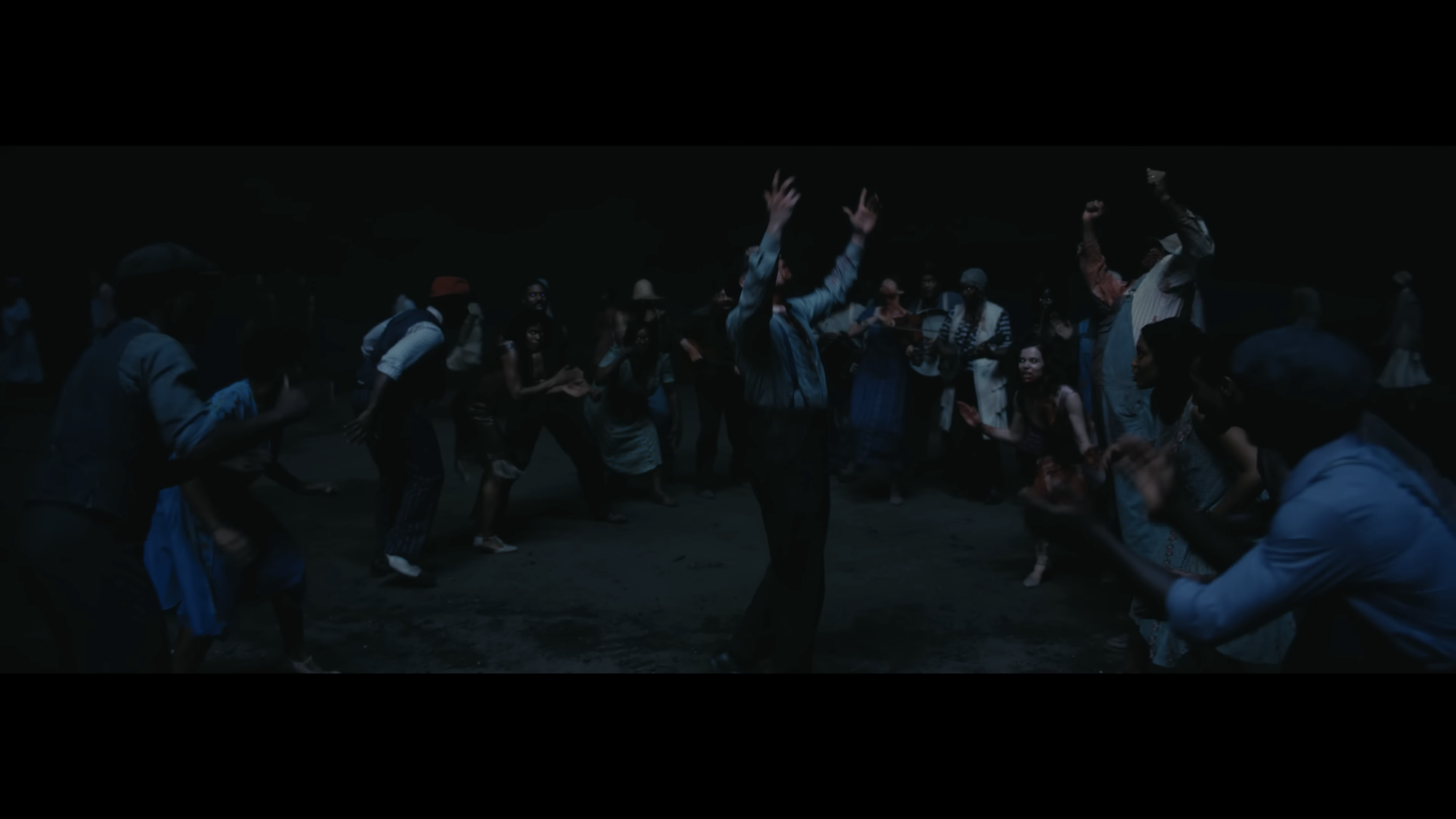
Ryan Coogler, Sinners, 2025, screenshot [courtesy of YouTube]
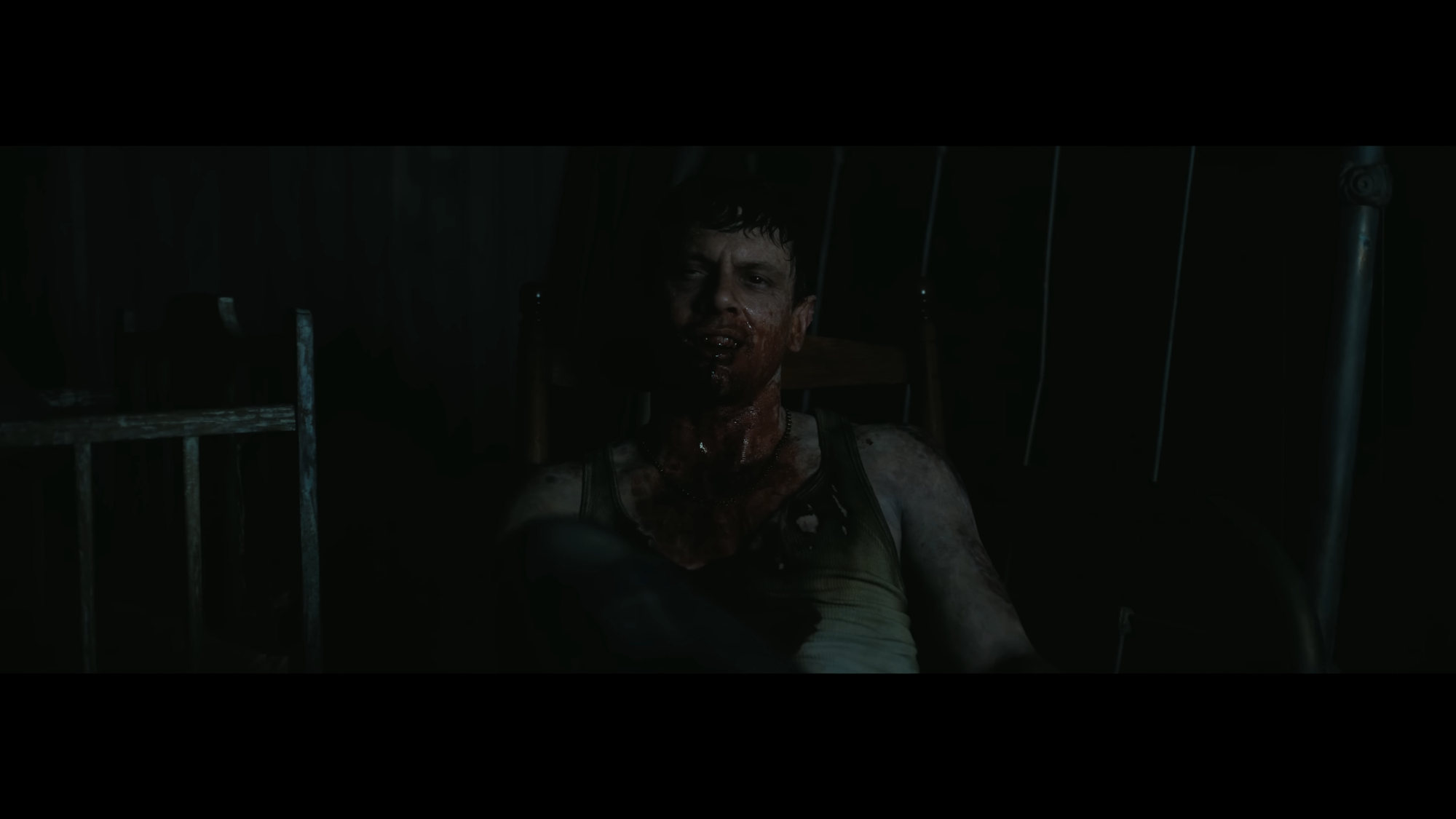
Ryan Coogler, Sinners, 2025, screenshot [courtesy of YouTube]
This statement might sound odd to new ears, but the ghosts or spirits of pre-European-encounter Manicaland and other parts of southern Africa were too complicated to understand. Their motives were as ghostly as their presence was. It was hard to determine why they were angry, why they brought misfortune to this village (a lightning bolt) and not a different one. If you stepped on this mushroom, some spirit was upset; if you didn’t step on something else, another spirit was upset. If one reads the ancient Japanese ghost stories collected by Lafcadio Hearn at the end of the 19th century—stories that were neglected during the rapid modernization of the Meiji Restoration—one finds ghosts whose motives are, again, inaccessible to the living. They are not always evil; they are not always malicious. Sometimes, they are just assholes. And a good number of the ghosts seem to want the living to confuse them with the living for reasons that are unclear or unexplained.
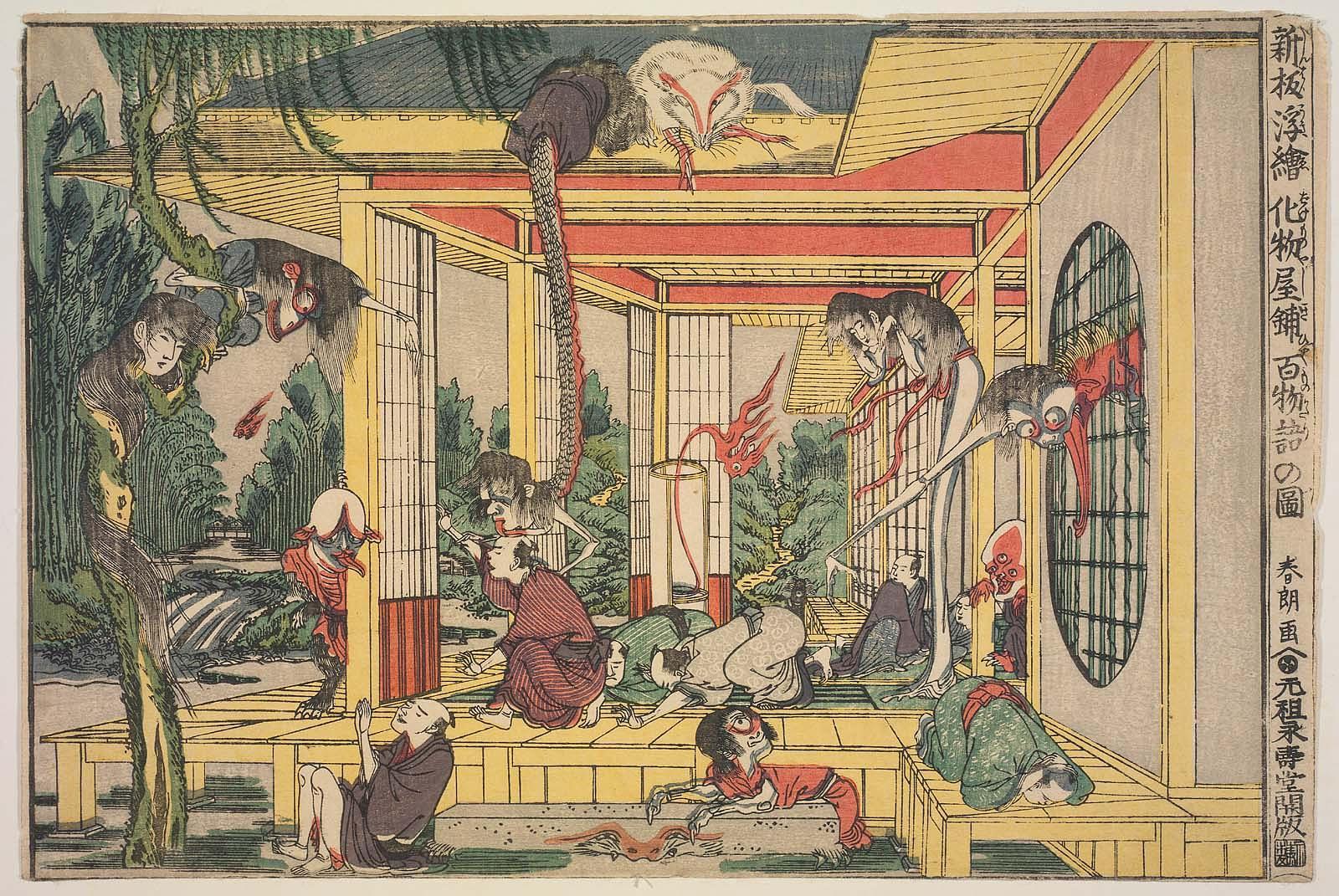
Hokusai, One Hundred Ghost Stories in a Haunted House (Shinpan uki-e bakemono yashiki hyaku monogatari no zu), c. 1790 [courtesy of Wikimedia Commons]
But within capitalist culture, the ghosts’ motives are what matters. They return from the void with a mission. In the case of Atlantics, Souleiman wants to punish the Africans who facilitated the export of death to Africa. Even before death, he was no longer human, but instead a price tag, the cost of maintaining the biopolitics of colonizing, capitalist nations. Similarly, one cannot dissociate the Black vampires in Sinners from what the Black nationalist reggae band Burning Spear calls “the days of slavery”—the days when millions of Africans were transformed into commodities, bought and sold on the market—this is the origin of American necro-economics, and of the vampires in Sinners. They haunt because their society is haunted, and this is the specter that haunts us, even to this day.
This is the horror.
Charles Mudede—who writes about film, books, music, and his life in Rhodesia, Zimbabwe, the USA, and the UK for The Stranger—was born near a steel plant in Kwe Kwe, Zimbabwe. He has no memory of this birth, but he does remember noticing himself in the mirror for this first time—it happened on May 3, 1972. Mudede is also a filmmaker: Two of his films, Police Beat and Zoo, premiered at Sundance, and Zoo was screened at Cannes. Mudede directed Thin Skin, and has written for the New York Times, Cinema Scope, Ars Electronica, C Theory, and academic journals. He also wrote the liner notes for Best of Del Tha Funkee Homosapien: Elektra Years. Mudede has lived in Seattle since 1989.